
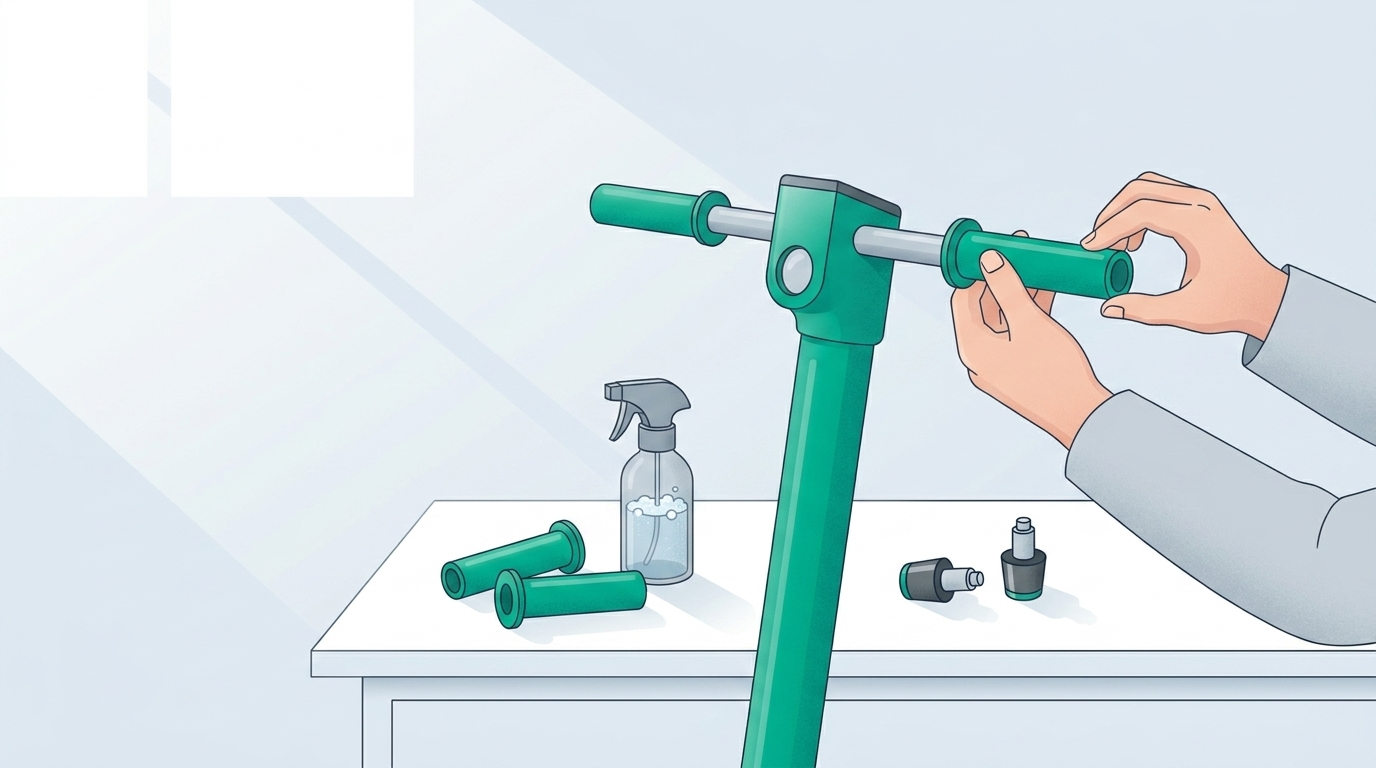
Freestyle scooter grips play a key role in the rider's comfort, control and safety. Over time they can wear out, get slippery, tear, or simply stop suiting your riding style. The good news: changing your freestyle scooter grips is a simple job, even for a beginner.
Whether you're a young rider, a parent, or a casual rider, this ACTA guide explains how to remove freestyle scooter grips and fit new ones cleanly, without damaging the handlebars. The goal: a better grip on the bars, more maneuverability, and more fun in every session.
Why change the grips on your freestyle scooter?
Grips are one of the main points of contact between the rider and the scooter. They directly affect stability, handlebar control, and the feel during tricks. On a freestyle scooter, they're put under particular strain during jumps, spins, manuals, and landings.
It's a good idea to replace your grips when:
- they're worn, smooth, or torn;
- they spin around the handlebars;
- they become uncomfortable during long sessions;
- they no longer offer enough grip;
- you want to customize the look of your scooter.
Grips in good condition make it easier to hold the handlebars, improve the precision of your movements, and reduce the risk of losing control. For a beginner or intermediate rider, this is a small detail that can really help you progress with confidence.
What tools do you need to remove freestyle scooter grips?
Before you start, set your scooter down on a stable surface. You don't need a full workshop. A few simple items are enough to remove the old grips and fit the new ones.
- A clean cloth;
- A little soapy water or rubbing alcohol;
- Optionally, a thin screwdriver to help loosen the grip;
- New grips suited to your handlebars;
- Bar ends, if the old ones are damaged.
Avoid overly greasy products, such as certain oils or lubricants, as they can stop the new grips from holding properly. A grip that slips on the handlebars can become a real problem, especially in freestyle.
How do you remove freestyle scooter grips?
The simple method with soapy water
The first method is to work a little soapy water in between the grip and the handlebars. To do this, gently lift the edge of the grip with your fingers or a small, non-sharp tool. Add a few drops of soapy water, then twist the grip back and forth.
Once the liquid has spread inside, gradually pull the grip outward. Don't force it all at once. Instead, use twisting motions to gently work it loose.
The air or thin-tool method
If the grip is on very tight, you can use a thin screwdriver to create a small gap between the grip and the handlebars. Be careful not to scratch or deform the handlebars. The idea isn't to force it, just to gently loosen the material.
Some riders also use compressed air to loosen the grips, but this method isn't essential. For regular maintenance at home, soapy water is usually enough.
Should you cut the old grips off?
If the grips are too damaged or impossible to remove, you can carefully cut them off. This should only ever be a last resort. Use a suitable tool and always cut away from yourself, keeping clear of your hands and the handlebars. For younger riders, this step should be done by an adult.
How do you fit new freestyle scooter grips?
Once the old grips are removed, clean the handlebars thoroughly with a cloth. They need to be clean, dry, and free of any residue. This helps the new grips hold better once fitted.
Step 1: prepare the new grips
Check that the grips are compatible with your freestyle scooter's handlebars. Most grips are designed to fit standard handlebars, but it's always best to check the length, diameter, and whether bar ends are included.
At ACTA, gear is chosen based on the rider's level, age, size, and type of riding. A scooter used for learning the basics won't necessarily face the same stresses as a model ridden regularly at the skatepark.
Step 2: make installation easier
To fit freestyle scooter grips more easily, you can very lightly dampen the inside of the grip with a little soapy water or rubbing alcohol. Alcohol has the advantage of evaporating quickly, which helps the grip settle properly in place after a few minutes.
Don't use too much liquid. The goal is simply to make it easier to slide onto the handlebars, not to leave the grip slippery long-term.
Step 3: slide the grip onto the handlebars
Line the grip up straight against the end of the handlebars. Push it on gradually, using small twisting motions. Keep going until it's fully in place.
Repeat on the other side, checking that both grips are properly positioned. They should be symmetrical, comfortable, and pushed on far enough that they won't shift while riding.
Step 4: fit the bar ends
Bar ends matter. They protect the ends of the handlebars and reduce the risks in the event of a fall. A freestyle scooter without bar ends can be less safe, particularly for children and beginners.
Push the bar ends in by hand, or carefully with a soft mallet if needed. They should hold firmly in place without sticking out awkwardly.
How long should you wait before riding?
After installation, let the grips dry for a few minutes, especially if you used soapy water or alcohol. Before you head out, test how secure they are by pulling gently on them and trying to twist them.
If the grips still move, wait a bit longer or wipe away any excess liquid. A secure fit is essential for keeping precise control of your scooter, whether you're cruising around town, riding the skatepark, or learning new tricks.
Choosing the right grips for your freestyle scooter
The choice of grips depends on how you ride and your personal preferences. A beginner rider will often look for comfort and good grip. A more regular rider may prefer longer, softer grips, or ones with a specific feel.
To choose well, take into account:
- the rider's level;
- age and hand size;
- the type of terrain: street, skatepark, pumptrack;
- how often you ride;
- the level of comfort you're after;
- compatibility with your handlebars.
On the ACTA website, you can also round out your setup with the Gentle 160mm grips (Black, Blue, or Rainbow), or a freestyle scooter designed to help you progress at your own pace.
Common mistakes to avoid
Changing freestyle scooter grips is simple, but a few mistakes can make the installation less effective.
- Using too much liquid: the grips risk spinning for a long time after installation.
- Fitting grips on a dirty handlebar: dust and residue reduce grip.
- Forcing it with a sharp tool: this can damage the handlebars or the grip.
- Forgetting the bar ends: they're important for both safety and the durability of your gear.
- Choosing the wrong grips: poor comfort can get in the way of your progress.
Taking a few minutes to properly fit your freestyle scooter grips helps you avoid these issues and enjoy a better feel while riding.
Conclusion: properly fitted grips for more control
Knowing how to remove and fit freestyle scooter grips is a simple, useful skill anyone can master. With the right technique, you can replace your grips quickly, boost your comfort, and get a better feel on the bars.
For a young rider, a parent, or a casual rider, this small piece of maintenance is one of the basics for riding with more safety and enjoyment. Choosing gear suited to your level, size, terrain, and goals remains essential for progressing over the long term.
Discover ACTA grips and build a consistent, reliable setup designed to support every rider's progression.
FAQ: freestyle scooter grips
How do you remove freestyle scooter grips without damaging them?
The easiest way is to use a little soapy water or rubbing alcohol between the grip and the handlebars, then gently twist the grip until it comes loose. Avoid pulling too hard all at once.
How do you fit freestyle scooter grips easily?
First clean the handlebars, lightly dampen the inside of the grip, then push it on using small twisting motions. Let it dry before riding.
Why do my scooter grips keep spinning?
They can spin if the handlebars are dirty, if too much liquid was used during installation, or if the grips are worn. Sometimes you'll need to remove them, clean the handlebars, and refit them properly.
When should you change the grips on your freestyle scooter?
It's best to change them once they become smooth, torn, uncomfortable, or slippery. Grips in good condition improve both control and safety.
Are bar ends mandatory?
They're strongly recommended. Bar ends protect the handlebars and reduce the risks in the event of a fall. They're one of those small accessories that matter for riding with more peace of mind.
Which grips should you choose for a beginner freestyle scooter?
For a beginner, go for grips that are comfortable, offer good grip, and match hand size. The choice also depends on age, level, terrain, and how often you ride.


Leave a comment
This site is protected by hCaptcha and the hCaptcha Privacy Policy and Terms of Service apply.