
The stunt scooter — also called freestyle — is a rigid, one-piece scooter built for tricks at the skatepark and on street. Kid, teen, or adult: this complete guide shows you how to pick the right one, from your first scooter to a pro setup.
💡 Is this your very first buy? Jump straight to our first stunt scooter guide.
Stunt scooter: what exactly is it?
Unlike a commuter scooter (foldable, with hand brake, sometimes electric), the stunt scooter is one solid piece, no folding or brake: everything's designed to absorb jumps and landings. If your goal is the skatepark, ramp, or street, this is the only type that works — a commuter scooter won't hold up.
Complete or parts?
For a first buy, grab a complete stunt scooter : assembled, tuned, and ready to ride straight out of the box, no compatibility to check. Best value to get started. You'll upgrade your scooter piece by piece later — wheels, grips, bar, deck — once you know what you're after.
Picking the right one by skill level
Beginner
Keep it simple : a light, nimble, and solid complete that forgives mistakes. Weight and handling matter more than tech specs. Our first stunt scooter guide walks you through the first steps.
Intermediate
Once the first tricks land (bunny hop, manual, 180), you can level up : a stiffer deck, solid compression, better wheels for more speed and stability.
Advanced / pro
A pro stunt scooter uses tough materials (forged aluminum or boxed deck), high-end compression, and 110-120 mm wheels that handle big ledge sets and hard landings.
Getting the right size (kids, teens, adults)
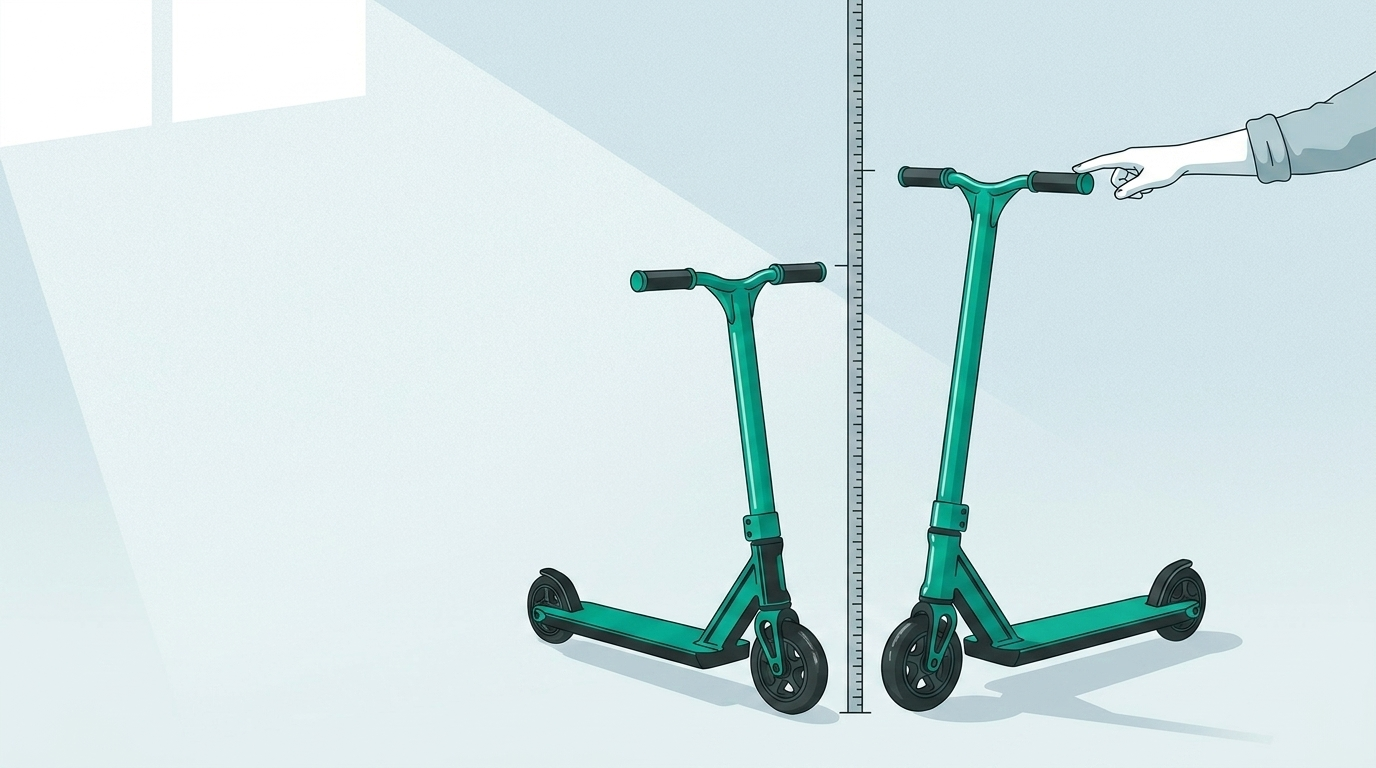
The universal benchmark, all ages : bar at hip/belly height, arms slightly bent. A bar too high or too low is the #1 brake on progress.
- Kids (5-9 years) : Mini or compact size, short deck, low bar.
- Teens : standard size, medium bar, IHC compression.
- Adults : longer/wider deck and taller bar for comfort and stability.
For the youngest riders, our kids' sizing guide helps you nail it.
Anatomy and technical parts
- The deck : the platform under your feet. Aluminum (light, rigid) or boxed (very tough).
- The bar : steel (tough, cheaper) or aluminum (light). Height is the #1 comfort factor.
- The fork : connects the front wheel to the bar ; it carries the compression system.
- Compression (IHC, HIC, SCS) : the mechanism that locks bar, fork, and deck together. IHC/HIC outfit most completes ; SCS is the toughest, for advanced builds.
- Wheels (110 mm standard, 120 mm advanced) : the core and rubber matter — light for spins, full core for durability, profiled for speed.
- Bearings : they control momentum and speed retention.
- Grips : grip and comfort ; the cheapest part to swap for a big feel upgrade.
Adult stunt scooter: what's different?
An adult scooter follows the same blueprint but with a taller bar, a bigger deck, and construction for heavy use. A heavier rider puts more stress on the gear: go for solid compression and durable wheels. Find our models in the Adult Stunt Scooter collection.
What budget to plan for?
- Entry level : perfect to test the vibe and start at the skatepark.
- Mid-range : the sweet spot to progress without buying again in 6 months.
- High-end / pro : premium materials and compression for riders who send it.
Pro tip : a good mid-range complete beats a poorly-matched pro scooter. And a ramp at home makes you progress faster than any upgrade.
Safety and maintenance
Helmet is a must, wrist guards and knee pads are highly recommended — especially at the start (see our protective gear and safety guide). For care, keep bolts tight regularly ; wheels and grips wear first and are easy to swap.
Which ACTA stunt scooter to pick?
All our scooters are complete, assembled, and designed in Hossegor :
- Getting started : the FS Teal (most accessible) or the F2 Bleu (tougher).
- For the youngest : the Mini Neochrome.
- To level up : the KSP Complete (Black, Neochrome, or Gold).
Everything's in the Stunt Scooter collection.
FAQ
What's the difference between a stunt scooter and a regular scooter?
A stunt scooter is rigid, one-piece, no folding or hand brake : it's made for tricks. A regular commuter scooter is foldable and won't take jumps.
What age can kids start stunt scootering?
From about 5-6 years with a Mini size that fits the kid (bar at hip height).
Complete or build it yourself?
Complete to start : built, tuned, no compatibility to check. Custom builds are for experienced riders.
What's IHC, HIC, SCS compression?
It's the system that locks bar, fork, and deck together. IHC and HIC equip most completes ; SCS is the toughest, for advanced builds.
What wheel size should I pick?
110 mm is the freestyle standard, works with most scooters. 120 mm is faster but for advanced models only.
Designed in Hossegor. Built tough.

Leave a comment
This site is protected by hCaptcha and the hCaptcha Privacy Policy and Terms of Service apply.