
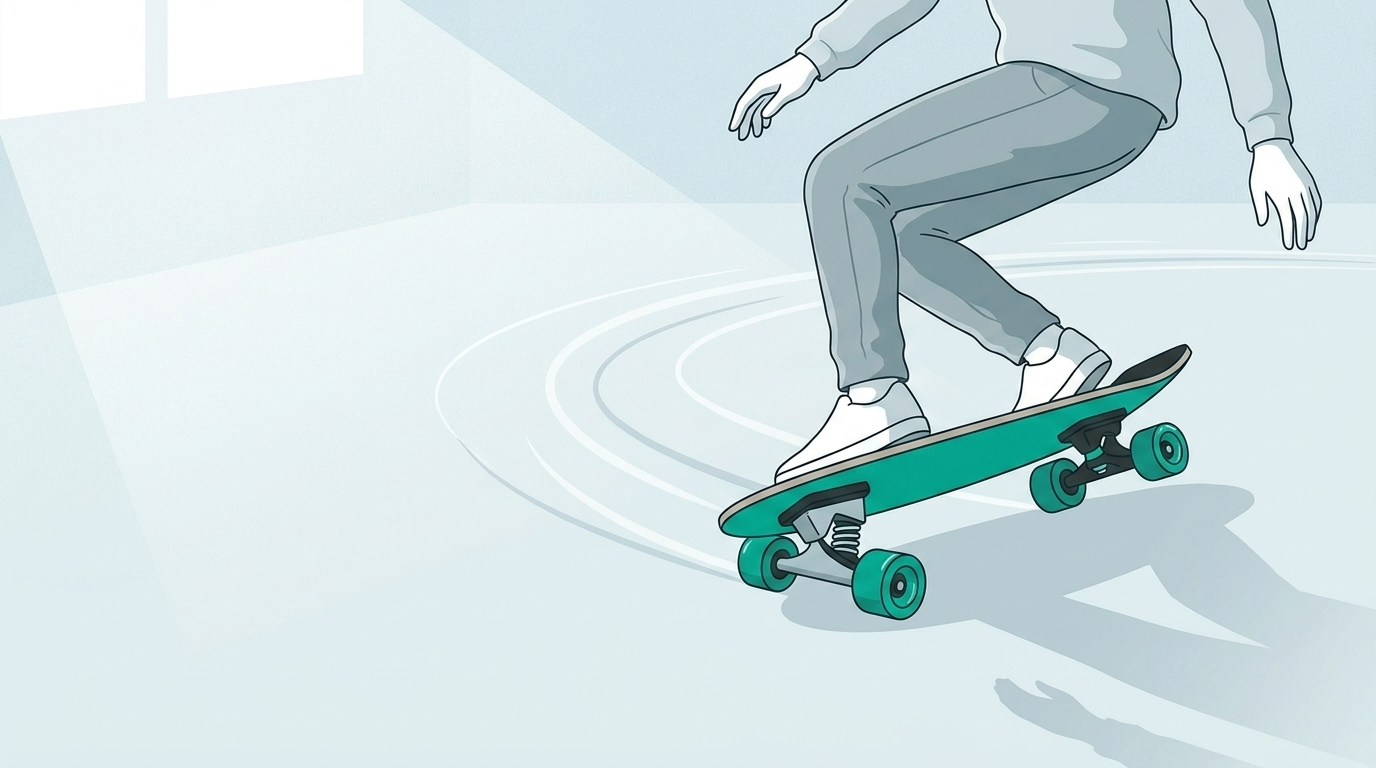
Surfskating is the ideal discipline for capturing surf-like sensations, even far from the ocean. Thanks to its highly mobile front truck, it lets you link turns, work on your stance, and build up speed without ever putting a foot down. This technique is called pumping.
But for many beginners, pumping a surfskate isn't intuitive at first. Should you push with your legs? Turn your shoulders? Lean forward? In this article, Acta guides you step by step to understand the movement, avoid common mistakes, and progress with more stability, control, and fun.
What is pumping on a surfskate?
Pumping is a technique that lets you move forward on a surfskate without pushing off with your foot. Instead of kicking like on a classic skateboard, the rider generates speed through a sequence of coordinated movements between the shoulders, hips, legs, and board.
In practice, the surfskate moves forward by drawing small curves. The body initiates the movement, the board follows, and the legs then drive the next push. That's what creates that smooth, flowing feeling, close to surfing or snowboarding.
Once mastered, pumping lets you ride longer, better control your lines, and gain confidence on flat ground, a pumptrack, or an open urban area.
Why learn to pump on a surfskate?
Learning to pump is one of the most important fundamentals for progressing in surfskating. This technique isn't just about moving forward. It also helps you better understand how your board behaves.
- Gain independence : you move forward without putting a foot down.
- Improve control : you learn to manage your stance and changes of direction.
- Work on your carving : you link turns that are smoother and cleaner.
- Strengthen your balance : you use your whole body, not just your legs.
- Recapture surf sensations : the movement echoes the acceleration on a wave.
For young riders, parents looking for accessible equipment, or casual riders, surfskating is also a great way to build coordination, confidence, and the pure joy of riding.
The right position for pumping on a surfskate
Placing your feet correctly
Before chasing speed, start by finding a comfortable stance. The front foot sits close to the front truck's bolts, slightly angled. The back foot sits on the tail or just in front of it, depending on what feels natural.
The goal is to keep a stable posture, with knees slightly bent. Avoid staying stiff and upright. Good pumping always starts from a supple stance, ready to absorb the board's movements.
Looking in the direction you want to go
Where you look plays an essential role. On a surfskate, the body often follows the eyes. If you look down at your feet, you risk losing your balance or blocking your movement. Instead, look at the line you want to take.
This simple habit helps improve fluidity, especially once you start linking turns on your surfskate.
How to pump on a surfskate, step by step
1. Start with a light push
To begin, give a small push with your foot, just like on a skateboard. The idea isn't to go fast, but to gently get the board rolling. Choose a smooth, flat, and open surface, away from traffic.
2. Initiate the movement with your shoulders
Pumping doesn't come from the feet alone. The movement starts in the upper body. Turn your shoulders slightly toward the first turn, then follow through with your hips. The board will naturally follow that rotation.
Imagine you're drawing S-shapes on the ground. Each curve helps drive the next one.
3. Bend and push through your legs
As the board enters the turn, bend your knees slightly. Coming out of the turn, push progressively through your legs to accelerate again. This compress-then-extend movement is what generates energy.
Don't try to force it. Efficient pumping is smooth, steady, and progressive. The cleaner your movement, the less effort you'll need.
4. Link turns from right to left
Once the first turn is complete, head off in the other direction. The shoulders turn, the hips follow, the legs drive. At first, make big, slow movements. Once you feel more comfortable, you can tighten the curves and pick up the pace.
Practical tips to progress faster
To get off to a good start in surfskating, consistency matters more than speed. A few short sessions on suitable terrain are often more effective than one long outing where you tire quickly.
- Choose a smooth, clean surface without too steep a slope.
- Start slowly to understand the movement.
- Keep your knees bent and your upper body relaxed.
- Work on wide curves before chasing tight turns.
- Wear protective gear, especially at the start: helmet, knee pads, elbow pads, and wrist guards.
The choice of gear also plays an important role. A beginner rider, a child, an adult, or an urban rider won't necessarily have the same needs. Age, height, skill level, terrain type, and intended use should guide your choice of surfskate.
Common mistakes to avoid
Using only your feet
A common mistake is trying to move the board forward using only the ankles. This makes the movement jerky and tiring. Surfskating calls for overall coordination: shoulders, hips, legs, and eyes.
Leaning too far back
If your weight stays too far back, the front truck won't work as well. You lose direction and efficiency. Keep a balanced weight distribution, with a slight forward commitment.
Wanting to go too fast too soon
Pumping takes time. Going too fast in your first sessions can create bad habits. Look for precision first — speed will come naturally afterward.
Forgetting protective gear
Even on flat ground, a loss of balance can happen. Protective gear isn't just for kids or beginners. It lets you ride with more confidence and focus on your progress.
Which surfskate should you choose to learn pumping?
To learn to pump on a surfskate, choose a board suited to your build and skill level. A model that's too unstable can hold back your progress. Conversely, a board that's not reactive enough can make pumping feel less natural.
At Acta, surfskates are designed to make riding accessible, with models geared toward cruising, carving, and progression. For a beginner, the ideal is to look for a good balance between stability, control, and maneuverability. More confident riders can turn to a more reactive board to link tighter curves.
Conclusion: pumping a surfskate is a question of rhythm and confidence
Pumping on a surfskate takes a bit of practice, but the principle stays accessible: a good stance, a well-placed gaze, shoulders that initiate the movement, and legs that push the board along. By training progressively, you'll gain in fluidity, control, and pure riding pleasure.
Whether you're a beginner, an urban rider, a parent looking for a suitable model, or a skate and stunt scooter rider, surfskating is a fantastic way to discover new sensations.
Ready to get started? Discover ACTA surfskates and find the model suited to your riding.
FAQ: how to pump on a surfskate?
How do you learn to pump on a surfskate?
Start on flat, smooth ground. Give a light push, bend your knees, turn your shoulders toward the turn, and link gentle curves together. The movement should come from your whole body, not just your feet.
Is it hard to pump a surfskate as a beginner?
The movement can feel strange at first, but it becomes more natural with practice. What matters is starting slowly, keeping a supple posture, and working on fluidity before speed.
Which surfskate should you choose to start pumping?
Choose a surfskate suited to your height, skill level, and riding terrain. To start out, look for a good balance between stability, maneuverability, and control so you can progress with confidence.
Can you pump a surfskate on flat ground?
Yes, that's actually one of surfskating's biggest advantages. With good pumping technique, you can generate speed on flat ground without ever putting your foot down.
Do you need to wear protective gear while surfskating?
Yes, especially while learning. A helmet, knee pads, elbow pads, and wrist guards let you ride with more safety and confidence.
Does surfskating help you progress in surfing?
Surfskating can help you work on your stance, shoulder rotations, carving, and coordination. It doesn't replace time in the water, but it's a great complement for keeping your feel for riding sharp.

Leave a comment
This site is protected by hCaptcha and the hCaptcha Privacy Policy and Terms of Service apply.