
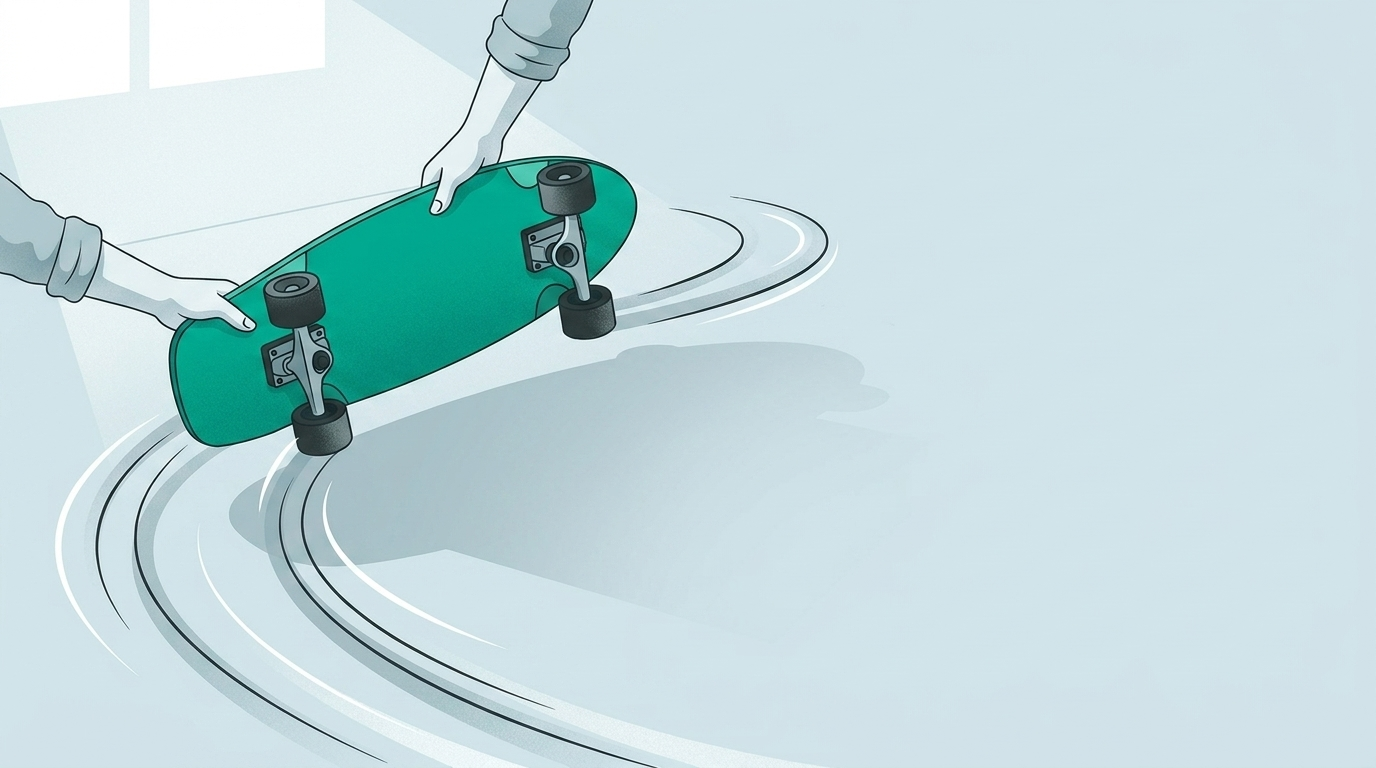
Surfskate is attracting more and more riders, and for good reason : it lets you chase sensations close to surfing, but on pavement. Accessible, fun, and super educational, it's ridden in the city, on smooth paths, by the beach, or at adapted skateparks.
But when you're getting started, one question keeps coming up : how do I start without feeling lost in the first few meters? Foot placement, balance, pumping, turns, safety, gear choice… this ACTA guide walks you through it step by step so you can build confidence and progress at your own pace.
What is a surfskate?
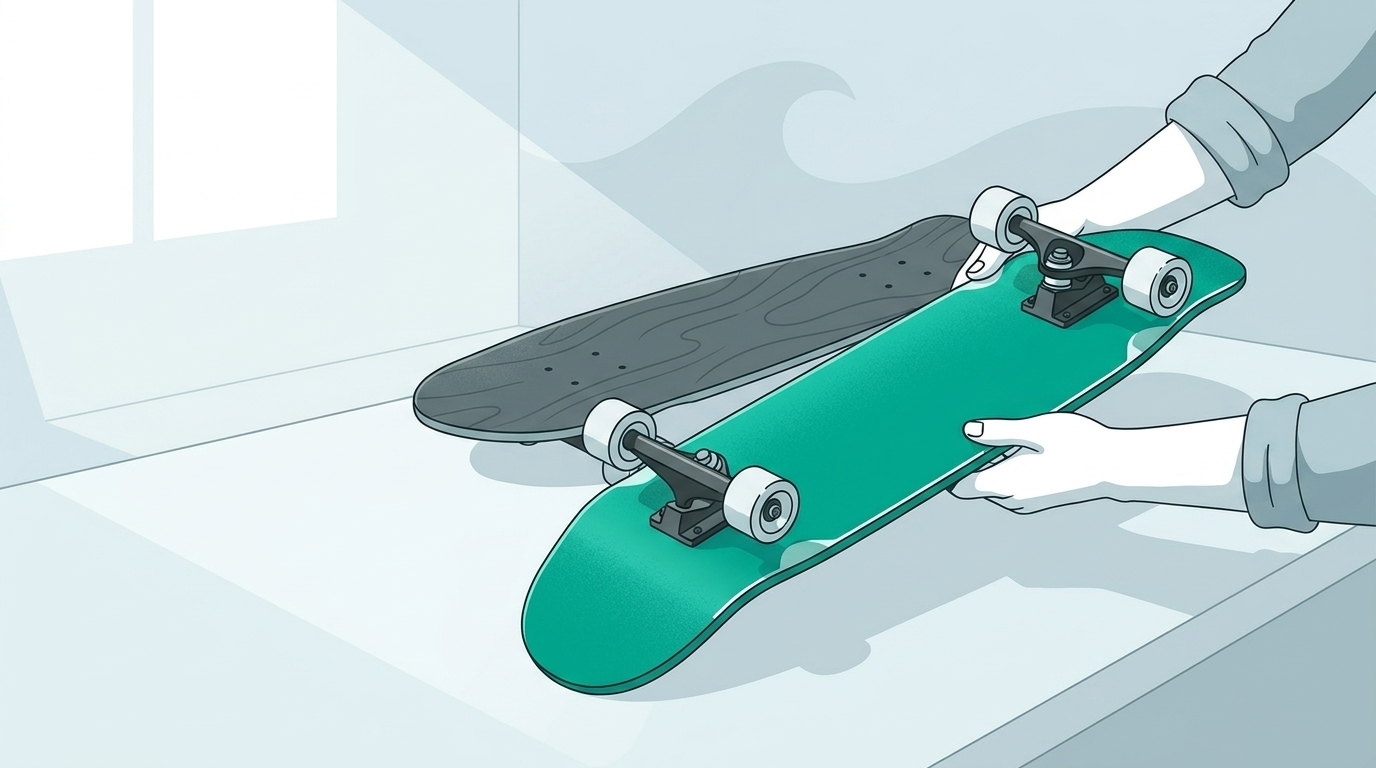
A surfskate is a board inspired by a skateboard, but designed to copy surf moves. Thanks to a very mobile front truck, the board lets you chain turns, build speed without constantly pushing with your foot, and work your weight placement.
Unlike a classic skateboard, a surfskate isn't ridden only in a straight line. It invites you to turn, carve, pump, and use your whole upper body. That's what makes the practice fun, physical, and really interesting for learning to ride.
For beginners, young riders, or parents hunting for accessible gliding, surfskate is a solid choice as long as you pick gear that fits and follow a few simple rules.
Picking the right gear before you start
Before you learn to surfskate, it's important to start with gear that matches your level, age, size, and how you want to ride.
Pick a surfskate that matches your level
A beginner surfskate needs to offer a good balance between stability and handling. A board that's too sharp can be hard to control at first, while one too rigid will limit carving feel.
When starting, look mainly for :
- a stable platform under your feet ;
- good width to place your weight with confidence ;
- wheels that soak up vibration ;
- a responsive truck that's not wild ;
- a size and weight that fits you.
Don't skip the protective gear
Surfskating is still a gliding sport. Even at low speed, losing your balance can happen fast, especially on your first turns. A helmet is highly recommended, and wrist, knee, and elbow guards make learning a lot less scary.
For kids, young riders, or beginners, protective gear lets you progress without worry. It also helps you dare to repeat moves, which is key to nailing control. Check out our protective gear and safety guide.
What stance should you take on a surfskate?
The first step to learn how to surfskate is finding your natural stance. Like skateboarding or surfing, there are two main positions :
- Regular : left foot forward, right foot back ;
- Goofy : right foot forward, left foot back.
No one is better. The key is picking the one where you feel most stable. To test it, stand naturally on the board while it's still, knees slightly bent, looking ahead with shoulders open toward the direction of movement.
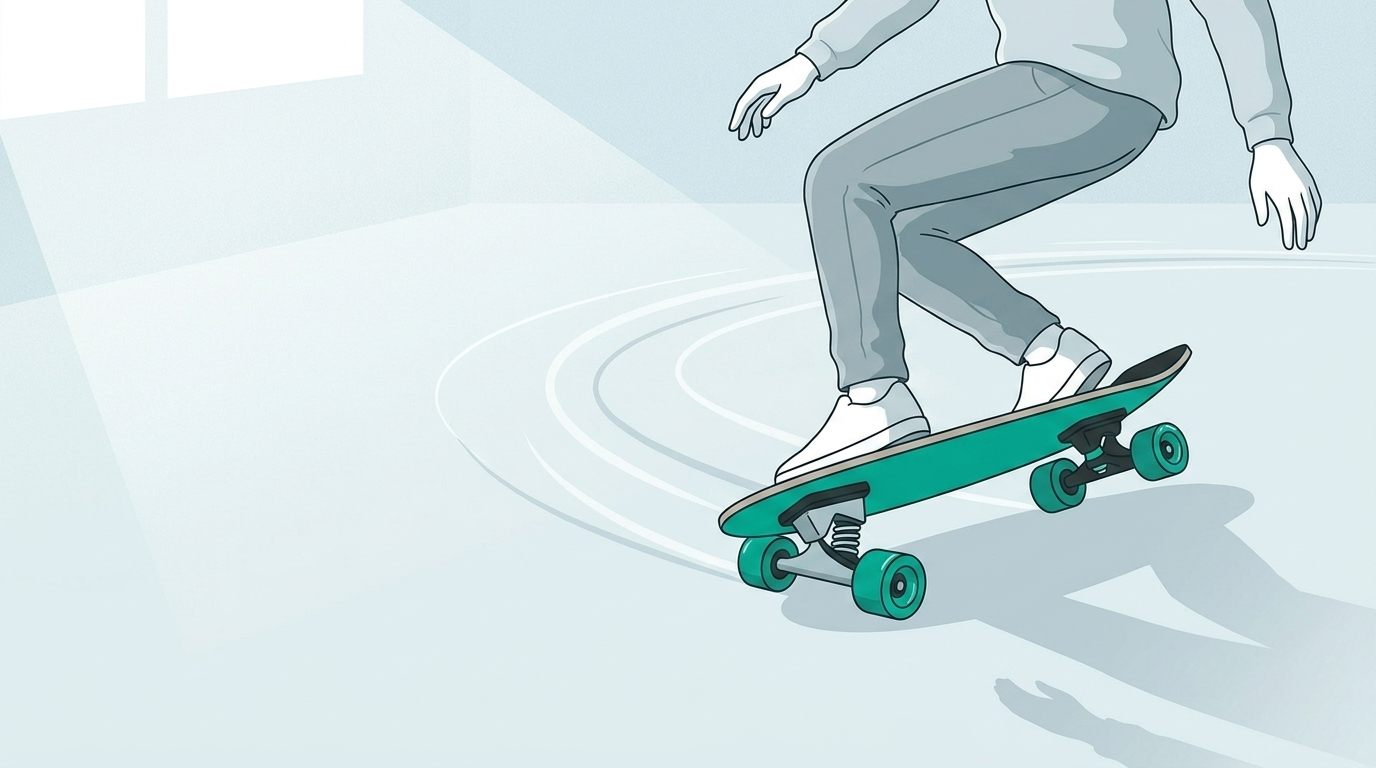
Your front foot guides the board. Your back foot gives you leverage in turns and helps control direction changes. Don't stay too rigid : surfskating needs leg suppleness and upper-body mobility.
Learning to move: the role of pumping
Surfskate pumping is the move that lets you go forward without stepping off every time. It's a key technique. It means using your shoulders, hips, and legs to build a carving dynamic.
How to do the pumping motion?
Start on a flat, smooth, open surface. Give a little push with your back foot, then put both feet on the board. Next, chain small turns left and right.
The move starts in your upper body. Rotate your shoulders in the direction you want, let your hips follow, then bring in your knees. The board will naturally enter a turn. By pressing your legs lightly in the turn then straightening up on the exit, you build speed.
At first, go for smoothness. Speed comes later. Good pumping isn't a jerky move, but a series of clean, gradual weight shifts. To dig deeper, see our guide on how to pump on a surfskate.
Nailing your first surfskate turns
The surfskate turn is the heart of the practice. To turn well, look where you want to go. Your eyes guide your shoulders, your shoulders guide your hips, and your hips drive the board.
To start, work big, slow turns. Don't try tight carves right away. Use space, bend your knees, and gently shift your weight onto your toes or heels based on direction.
Once you're comfy, you can tighten the radius step by step. That's when surfskate gets really fun : the board responds better, your weight placement gets sharper, and the gliding feel gets close to real surf.
Practical tips to progress in surfskating
To progress in surfskating, regular practice beats intense sessions. Short, frequent sessions often work better than one long, occasional one.
- Pick good terrain : find a smooth, flat, traffic-free zone.
- Warm up : a few ankle, knee, and shoulder moves prep your body well.
- Take it slow : control comes before speed.
- Drill the basics : stance, pumping, wide turns, braking.
- Keep your eyes up : this naturally boosts balance and line.
If you come from surfing, surfskate can help you work weight placement, rotations, and reading curves. If you come from skateboarding or freestyle scooter, it brings a smoother, carving-focused take.
Common mistakes to dodge
When starting, some mistakes slow progress or make the practice less fun.
Staying too stiff
Surfskating takes looseness. Stiff legs and a locked upper body tank your ability to carve. Keep knees bent and flow with the moves using your shoulders.
Watching your feet
Staring at the board is natural at first, but it throws off balance. Try to look ahead, toward your desired line.
Wanting to go too fast
Speed can feel great, but it needs to come with control. Master turns and pumping at low speed first.
Choosing the wrong board
A surfskate too sharp, too small, or not fitted to your build can make learning harder. The choice rests on level, age, size, terrain, and goal : cruising, carving, surf training, or urban riding.
Why pick an ACTA surfskate?
ACTA builds gear to make gliding sports more accessible. For a beginner or intermediate rider, that's key: gear should build confidence, stay fun to use, and let you progress naturally.
ACTA surfskates are for riders who want wave-like feel, learn to carve, work their weight placement, or just enjoy snappier urban cruises. The goal isn't to make things harder, but smoother. Also check out ACTA skateboards.
How to practice safely?
For a first session, find a quiet spot : empty parking lot, wide bike path, green way, or slow skatepark. Skip roads, packed sidewalks, and steep descents.
Start by pushing gently, getting on and off the board, then doing big turns. Next, work pumping for a few meters. Once you feel the board respond better, grow the size of your moves step by step.
Surfskate is super fun when it stays progressive. Learn clean, not fast moves.
Wrap-up: surfskate, accessible and growing practice
Learning how to surfskate is really about grasping the basics : pick gear that fits, find a good stance, learn to pump, master turns, and build step by step.
With some regular time on it, surfskate quickly becomes fun, smooth, and really complete. It builds balance, coordination, control, and the joy of gliding. Whether you're a newbie, a parent looking for a board for your kid, or an urban rider chasing new thrills, the right gear makes all the difference.
Check out ACTA surfskates and find the board that fits your ride.
FAQ: how to surfskate?
Is it hard to start surfskating?
Surfskate takes a little getting used to, mainly because of the very mobile front truck. But with a flat surface, protective gear, and the right board, the basics become super accessible pretty fast.
How do you move forward on a surfskate without pushing?
You have to learn pumping. This move is chaining turns using your shoulders, hips, and legs to build speed step by step.
Which surfskate should I pick to start?
To begin, go for a surfskate that's stable, comfy, and your size. The choice also rests on terrain, rider age, and how you want to ride : cruising, carving, or surf training.
Do you need protective gear for surfskating?
Yes, especially at the start. A helmet, wrist guards, knee pads, and elbow pads let you learn with more guts and cut the risks if you fall.
Can you surfskate in the city?
Yes, urban surfskating feels great on smooth, clear ground. But avoid packed zones, roads open to traffic, and slopes too steep.
Does surfskate help you get better at real surfing?
Yes, it can help you work weight placement, rotations, your gaze, and carving moves. It's not a substitute for water time, but it's a great land-based edge tool.

Leave a comment
This site is protected by hCaptcha and the hCaptcha Privacy Policy and Terms of Service apply.